
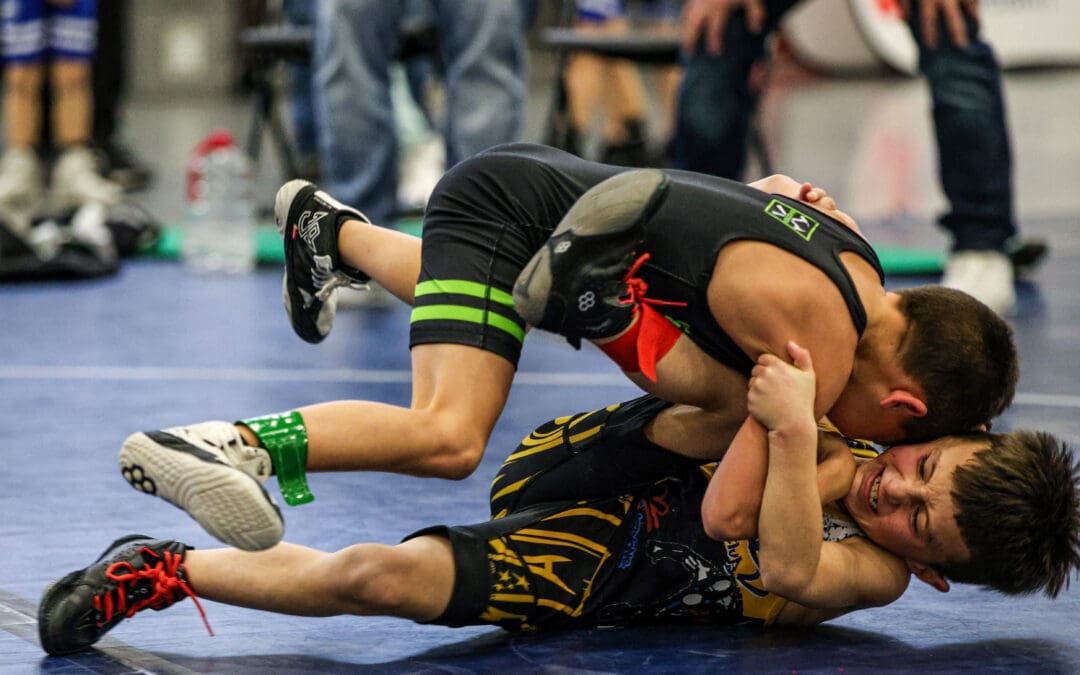
As the youth wrestling season reaches its final stretch and the Utah Youth Super State wrestling tournament approaches, this is when the sport becomes as much mental as it is physical.
Athletes are tired.
Bodies are sore.
Minor injuries are part of daily training.
For wrestlers, parents, and coaches, this phase can feel heavy. But in reality, it is exactly where meaningful development happens.
Late-Season Wrestling Is About Discipline, Not Motivation
Legendary wrestling coaches have long emphasized that success at the end of the season is driven not by excitement or hype, but by discipline.
Dan Gable, one of the most accomplished figures in wrestling history, famously structured his training around consistency under fatigue. His belief was simple: championships are not won on days when athletes feel great, but on days when they execute correctly despite discomfort.
This approach is echoed by John Smith, who has consistently emphasized that late-season success comes from fundamentals performed with precision, not from adding more techniques or increasing volume.
At this stage, the work shifts from building to refining.
The Psychology of Pushing Through Fatigue
From a sports psychology perspective, this phase aligns closely with Carol Dweck’s research on mindset, which highlights that long-term performance is driven by a commitment to the process rather than short-term results.
Athletes who understand that fatigue, soreness, and frustration are expected are better equipped to stay composed under pressure. This mental framing is critical in wrestling, where matches are often decided by one position, one exchange, or one moment of hesitation.
Mental toughness is not built in isolation; it is built through repetition, routine, and accountability.
What Smart Late-Season Wrestling Training Looks Like
As the Super State tournament approaches, progress does not come from doing more. It comes from doing things better.
Effective late-season wrestling preparation focuses on:
- Technical sharpness over volume
- Recovery and injury management without losing structure
- Match situational awareness and composure
- Trusting the work already completed throughout the season
This is the stage where athletes learn to compete through discomfort while still protecting their long-term development.
Finishing Strong Sets the Foundation
State tournaments are rarely won by the athlete who felt perfect in February. They are won by the athlete who stayed disciplined, trusted their preparation, and remained consistent when the season demanded the most.
For youth wrestlers, especially, learning how to finish a season strong carries forward well beyond one tournament. It builds resilience, confidence, and an understanding of what real commitment looks like.
The season is not over yet.
Finish strong!